In 1939, NBC set a broadcast milestone by airing the first-ever televised professional football game. The network brought the matchup between the Philadelphia Eagles and the Brooklyn Dodgers to about 1,000 televisions in New York City in what was to be the first of many firsts in the long-running broadcast partnership between NBC and the NFL.
In 1964, NBC Sports signed a five-year, $36 million contract with the American Football League (AFL) to broadcast the league’s games for five years beginning in 1965. It was that partnership that would lead to NBC Sports’ role in the first of many Super Bowls.
How the Super Bowl Was Born — And Why New York Still Matters
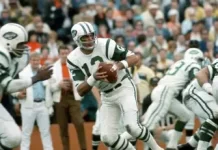
The Super Bowl was created as part of the 1966 merger agreement between the NFL and the upstart AFL, a deal that reshaped American sports. For New Yorkers, the story hits even closer to home. The merger set the stage for the New York Jets’ rise, Joe Namath’s iconic guarantee, and the moment the AFL proved it belonged on football’s biggest stage.
A Rivalry That Forced a Truce
By the mid‑1960s, the NFL and AFL were locked in a costly battle for players and market share. Salaries soared as both leagues fought for talent, and owners realized the financial arms race couldn’t continue. The merger brought stability — and with it, a new championship game between the league winners.
That game would eventually become the Super Bowl. And New York would play a defining role in its early identity.
New York’s Early Impact
The first AFL‑NFL World Championship Game was played in January 1967, but it wasn’t until the Jets stunned the Baltimore Colts in Super Bowl III that the event truly exploded. Namath’s guarantee — still one of the most famous moments in sports — validated the AFL and cemented the Super Bowl as a national spectacle.
For New York fans, that win wasn’t just a championship. It was a turning point in football history.
Television Turns the Game Into a Cultural Force
As the NFL grew, so did the Super Bowl’s reach. Television networks recognized the game’s massive audience potential and invested heavily in production and promotion. New York, as the nation’s media capital, became a central hub for the sport’s storytelling, broadcasting, and cultural impact.
The Super Bowl soon became the most‑watched broadcast in the United States — a position it still holds.
A Legacy That Still Shapes the League
Nearly 60 years later, the Super Bowl remains the crown jewel of American sports. What began as a contractual obligation in a merger agreement has grown into a global event watched by more than 100 million viewers annually.
And New York — from the Jets’ early shockwave to the Giants’ unforgettable Super Bowl moments — continues to be one of the cities most intertwined with the game’s legacy.